Understanding Foundations: A Comprehensive Guide to House Foundation Types
What are foundations?
When it comes to building a house, the foundation is one of the most important components. A strong foundation ensures that the house is stable and secure, and can withstand the test of time. In this guide, we’ll take a closer look at concrete foundations, their types, and how they are constructed.
What is a Concrete Foundation?
A concrete foundation is a type of foundation that is made of concrete, a mixture of cement and aggregates such as gravel and sand. It is used to support the weight of a building and transfer the load to the ground. Concrete foundations are known for their strength and durability, and are commonly used in residential and commercial construction.
How are Concrete Foundations Constructed?
Concrete foundations are typically constructed in several steps. Here’s a brief overview of the process:
- Excavation: The site is excavated to the required depth and size of the foundation.
- Footings: Footings are poured at the base of the foundation to provide additional support.
- Forms: Forms are constructed to define the shape and size of the foundation.
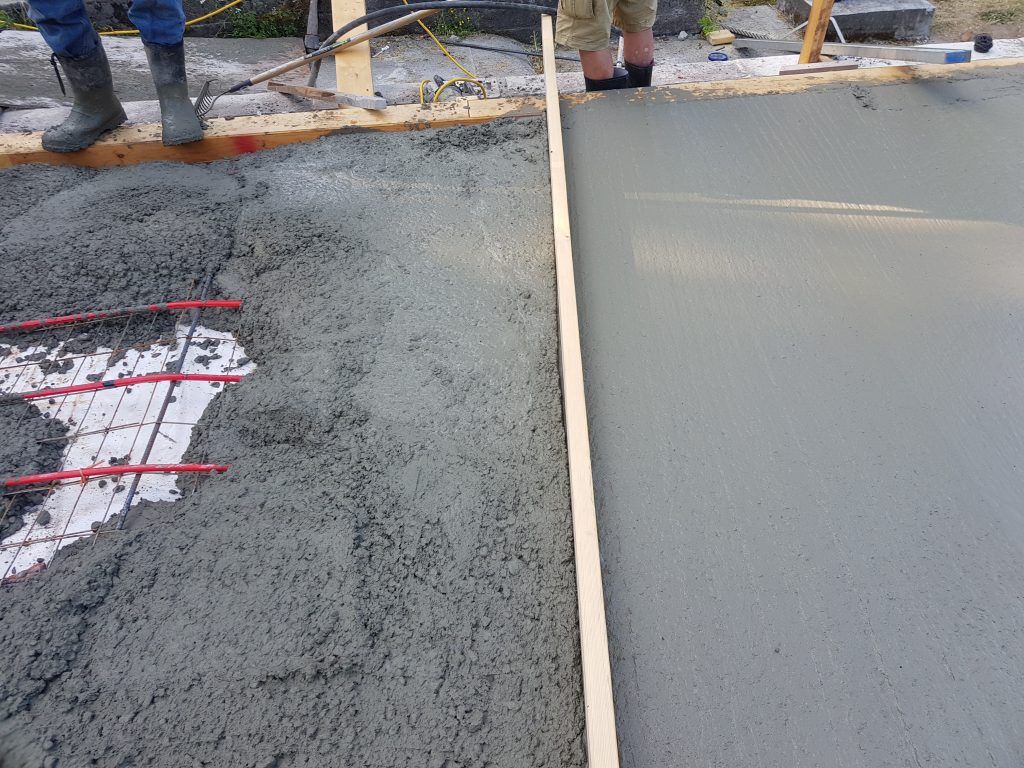
- Reinforcement: Steel reinforcement is added to the forms to provide additional strength.
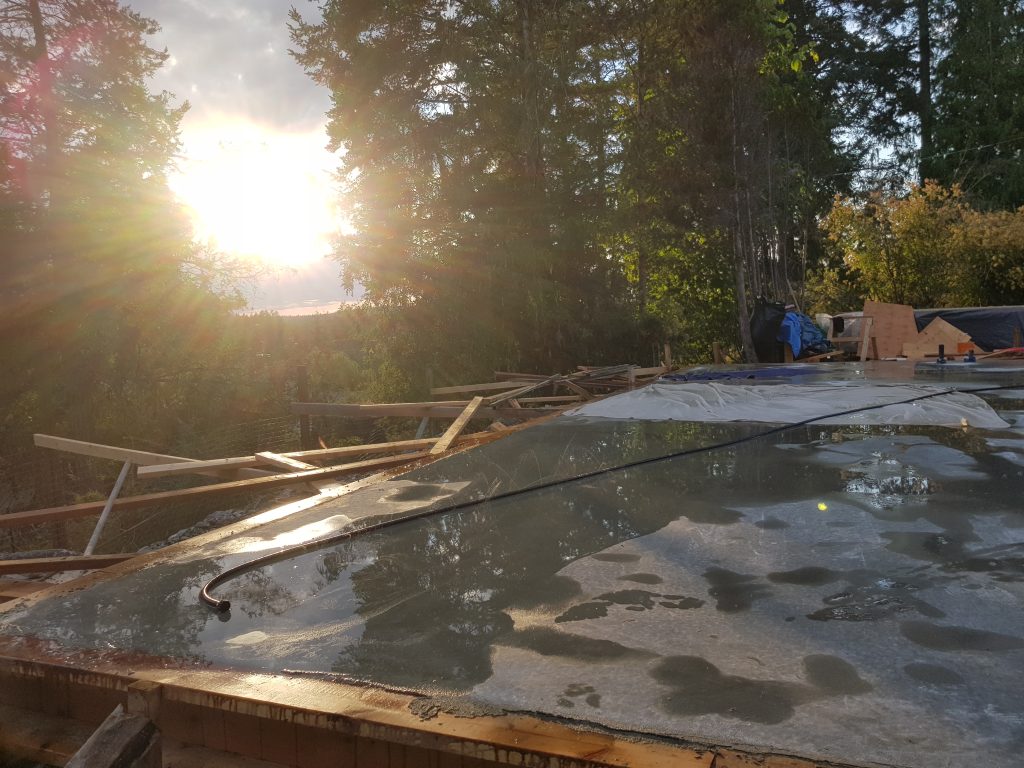
- Pouring: Concrete is poured into the forms and allowed to cure.
- Finishing: The surface of the foundation is finished to ensure a smooth and level surface.
Building Site
The most important thing to consider before deciding on a foundation design is the building site. Everything from the makeup of the ground (rock, earth, fill, sand, clay) to the climate and available materials will determine which type of foundation is right for you. The following list will take you through the four primary types of concrete foundations, where and when they are best used, and the Pros and Cons of each.
Types of Foundations
1. Slab Foundations
A slab foundation, also known as a concrete slab or slab-on-grade foundation, is a type of foundation commonly used in residential and light commercial construction. It consists of a single, horizontal layer or “slab” of concrete that is directly poured onto the ground or in a shallow excavation. This concrete slab serves as both the foundation and as the floor of the structure built on top of it.
Where and When to Use a Slab Foundation
Slab foundations are most popular in warmer climates, and are typical of the southern United States. Cold temperatures can cause cracking due to expansion and contraction of the concrete, so slab foundations are not common in less temperate zones. Contrary to this conventional wisdom, slabs have a niche popularity even in colder climates (like ours, Canada) due to their very simple and cost effective design. In colder climates, slab foundations must be insulated to below the frostline to prevent cracking. Engineers specifications, those provided by local building codes, the specifications of the material manufacturer or building authority will specify the requirements for your region.
Use a slab or insulated slab design when you are looking for a low cost solution and the terrain of your building site is appropriate. Slabs are not suitable for areas prone to flooding or sites with poor drainage, as slabs often sit only inches above grade.
Key Features of Slab Foundations
- Reinforcement: Slab foundations may incorporate steel reinforcement, such as rebar or wire mesh, to enhance their strength and resist cracking. This reinforcement helps distribute loads and minimizes the potential for shrinkage cracks.
- Thickness: The thickness of a slab foundation can vary, but it is typically at least 4 inches thick and often thicker around the perimeter or under walls. The thickness depends on factors such as the load-bearing requirements of the structure and local building codes. Even thinner slabs are also sometimes used, often called skim coats, typically to cover an unfinished crawlspace or basement floor, but they are not load bearing and not, strictly speaking, foundations.
- Types of Slabs: There are different types of slab foundations, including monolithic slabs (where the slab and footing are poured simultaneously), and post-tensioned slabs (where high-strength cables are tensioned after the concrete has set to increase strength).
Advantages of Slab Foundations:
- Cost-Effective: Requiring less materials and concrete, slab foundations are often more cost-effective than other types of foundations, such as basements.
- Suitable for Certain Soils: Slab foundations can be suitable for areas with stable soil conditions. Proper soil testing is essential to determine if a slab foundation is appropriate.
- Simplified Construction: Construction of a slab foundation is generally simpler and faster compared to other foundation types, contributing to quicker construction timelines.
Disadvantages and Considerations:
- Limited Access: Slab foundations provide no access to utilities or plumbing beneath the structure, making repairs or modifications more challenging and limiting flexibility in interior room placement later on.
- Not Suitable for All Soil Types: In areas with expansive or poorly compacted soils, slab foundations may be prone to movement or cracking. Areas with poor drainage or those prone to flooding are not suitable for slabs.
- Insulation Considerations: Slab-on-grade construction may require additional insulation measures to maintain thermal efficiency, as the slab, which is also your floor, is in direct contact with the ground.
Ultimately, the choice of foundation type, including whether to use a slab foundation, depends on factors such as local building codes, soil conditions, climate, and the specific requirements of the structure being built.
2. Crawlspace Foundations:
A crawlspace foundation is a type of foundation that elevates a building slightly above ground level, creating an enclosed area underneath the floor of the structure. This foundation type is characterized by a series of piers or walls that support the building, allowing for limited access to the space beneath.
Key Features of a Crawlspace Foundation:
- Elevated Structure: Unlike slab foundations, crawlspace foundations elevate the building above the ground level. This elevation provides several advantages, including protection against moisture and easier access for maintenance.
- Accessible Substructure: The crawlspace itself is a shallow area with enough room for someone to crawl or maneuver beneath the building. This accessible substructure allows for the installation and maintenance of utilities, plumbing, and electrical systems.
- Ventilation: Crawlspace foundations often incorporate vents to allow air circulation beneath the structure. Proper ventilation helps prevent issues such as mold, mildew, and wood decay by promoting airflow and reducing humidity.
- Insulation: Insulation may be installed in the crawlspace to enhance energy efficiency. This is especially important in regions with varying climates to maintain a comfortable interior temperature.
- Pier-and-Beam Construction: Crawlspace foundations typically use a pier-and-beam construction method, where piers or posts support beams that, in turn, support the structure. This design allows for adaptability to uneven terrain. Cladding in then added surrounding the open crawlspace piers, closing in the building envelope.
Advantages of Crawlspace Foundations:
- Access for Maintenance: The crawlspace provides easy access for repairs and maintenance, including plumbing and electrical work.
- Ventilation: Proper ventilation can help prevent moisture-related issues and improve indoor air quality.
- Vulnerability to Pests: The crawlspace can be susceptible to pests such as rodents or insects if not properly sealed.
- Elevation: Elevating the structure can provide additional protection against flooding and water damage.
Disadvantages and Considerations:
- Cost: Crawlspace foundations may have higher initial costs compared to slab foundations, primarily due to the additional materials and labor involved.
- Insulation Challenges: Proper insulation and moisture control are essential to prevent issues associated with the crawl space, such as mold or wood decay.
- Moisture and Radon: Crawlspaces require adequate venting if unheated to reduce mold and other moisture related issues. Radon gas that naturally outgasses from the ground can also cause health issues with inadequate ventilation.
3. Basement Foundations:
A basement foundation is a type of foundation that involves excavating a significant portion of the ground beneath a building to create a livable space below ground level. This foundation type offers both structural support and additional functional, living, or storage space.
Key Features of a Basement Foundation:
- Below-Ground Living Space: Unlike slab or crawlspace foundations, a basement foundation involves digging into the ground to create a fully enclosed living or storage space beneath the structure and well below the frost line of colder climates.
- Full-Height Walls: Basement foundations feature walls that are typically the full height of the structure. This design maximizes the usable space below and often allows for larger windows or even walk-out access when the landscape in sufficiently sloped
- Stair Access: Access to the basement is provided through staircases, either located inside the building or, in the case of walk-out basements, through exterior stairs that lead directly to ground level.
- Versatility: Basements can serve various purposes, including additional living areas, bedrooms, recreational spaces, or storage. The versatility of a basement makes it a popular choice for homeowners seeking multifunctional spaces.
- Foundation Footing: Basements are supported by a foundation footing, which is a wide and reinforced section at the base of the walls. This footing distributes the weight of the structure and helps prevent settling.
Advantages of Basement Foundations:
- Additional Living Space: Basements provide valuable additional space that can be finished to meet various needs, increasing the overall usable square footage of a home.
- Natural Cooling: Being underground, basements tend to maintain a more consistent temperature, providing natural cooling benefits in warmer months.
- Storage: Basements are commonly used for storage purposes, accommodating items such as seasonal belongings, utility equipment, or recreational gear.
Disadvantages and Considerations:
- Construction Costs: Excavating and constructing a basement can be more expensive than other foundation types due to the labor and materials involved.
- Waterproofing Challenges: Basements may be prone to moisture-related issues, and proper waterproofing measures are crucial to prevent water infiltration.
- Ventilation: Adequate ventilation is essential to maintain air quality in basements, especially if used as living spaces.
Basement foundations are popular choices in regions with cold climates, where having living space below ground provides insulation benefits. Homeowners often appreciate the flexibility and additional square footage that basements offer, making them a desirable option for those seeking functional and versatile spaces within their homes.
4. Pile Foundations:
Pile foundations are a type of deep foundation system used in construction to support structures when shallow foundations, such as slab or crawlspace foundations, are insufficient due to poor soil conditions. Pile foundations involve driving or installing vertical structural elements, known as piles, into the ground to transfer the load of a building to deeper, more stable soil layers or bedrock.
Key features of pile foundations include:
- Deep Structural Support: Pile foundations extend deep into the ground to reach stable soil or bedrock, providing reliable structural support.
- Types of Piles: Piles can be made of various materials, including concrete, steel, or timber, and come in different shapes and sizes. The choice of pile material and design depends on factors such as load-bearing capacity requirements, soil conditions, and construction specifications.
- Installation Methods: Piles can be installed using different methods. Driven piles are forcefully driven into the ground, while bored piles involve drilling holes, placing the piles, and filling them with concrete.
- Load Distribution: Pile foundations distribute the load of the structure vertically, reducing the risk of settlement and ensuring stability.
Advantages of Pile Foundations
- Challenging Soil Conditions: Pile foundations provide high load-bearing capacity and stability even in challenging soil conditions, and the ability to prevent settlement.E
- If soils are easily dug then pile foundations can be an inexpensive option for a do-it-yourselfer. Thorough site investigation is essential to determine the appropriate type of piles and installation method based on soil conditions.
Disadvantages and Considerations
- Cost: Pile foundations can be more expensive than shallow foundations due to the materials, equipment, and specialized labor required for installation.
- The underside of the building will still need to be protected against rat, mice and vermin.
- Pile foundations are commonly used in urban areas with challenging soil conditions or when constructing buildings with significant loads. The choice of pile foundation depends on factors such as soil characteristics, building requirements, and project budget, making it a versatile option for ensuring stability and structural integrity in various construction scenarios.
Pile foundations are commonly used in areas with challenging soil conditions or when constructing buildings with significant loads. The choice of pile foundation depends on factors such as soil characteristics, building requirements, and project budget, making it a versatile option for ensuring stability and structural integrity in various construction scenarios.
Additional Resources: