Five years ago I was a few years into what proclaimed to be a very promising career as a management consultant, or some other vaguely prestigious corporate title. I did not know why at the time but despite promising opportunities available to me I was unsatisfied and restless. On a summer vacation in BC, an old platonic friendship turned romantic, which would change the course of all the years that followed. Lucia and I went to university together, and she had been living a semi-nomadic lifestyle, travelling the world and touching back in Canada periodically. We had travelled together years prior and were soon making plans for another journey. I left my job in Toronto, though I continued working independently for one of the clients. I became a digital nomad, for a time, while Lucia worked in the wine industry.
We spent a season in the Okanagan before our big trip. Destination: Australia. But first, a 3 month layover in New Zealand to see my family. While we were making our way around, I got a reply to a general job posting I had placed from a remote lodge in the Central Plateau of Tasmania. One meeting led to another and suddenly we were running a small hotel in rural Australia. Strange life. Then 2020 happened. Our tenure as managers was short-lived. With the tourism industry in shambles and the flights leaving Australia dwindling, we went back to Canada to weather what would turn our to be a multi-year storm.
We stayed for a time, like good millennials, in my parents’ basement and started planning next steps. I figured I would use the time to do something new and different. Lucia and I had spent a lot of time looking at houses we liked on our travels and all the design features we appreciated. I began to daydream about renovating or building a house. My father had always done all of our home renovations and my grandfathers on both sides of the family had built their own houses, so it was always ingrained in me that it is something people can actually do. I kept the idea in the back of my mind as I began casually looking into trade school programs.
Wary of going back to school again, I sought the advice of a multi-trade entrepreneur and one of my oldest friends I grew up with in Montreal. He advised to forgo the carpentry program and to go work for a carpenter. In doing so I would have a) no upfront investment, b) I would see if it was something I actually wanted to do, c) I would learn more in 6 months working construction than in a formal educational setting. Now, I can’t tell you if that was good advice but I opted to take it.
I lurked job postings for Vancouver Island, a place nearby we wanted to spend more time exploring. One ad was seeking level 2 and above apprentices and listed a variety of proficiencies in foundation, framing and finishing work. I responded to the ad explaining that I had none of the skills he was looking for but that I was keen to learn and that I would be on Vancouver Island soon. To my surprise, he told me contact him when I was local and available. So we set about making ourselves “local” to Vancouver Island.
We found a cheap off-season rental in a tiny 500 sq ft cabin by the waterfront in a small resort in the Comox Valley. I went for a very informal interview on the construction site where the crew were completely making over a house; it was a skeleton on the inside and beginning to approximate a house on the outside. I left with instructions to return the following Tuesday with some steel-toe boots, a tool belt and a hammer. And so I found myself early on a cold and wet Tuesday morning, on the third story of a scaffold, operating an angle grinder for the first time. I remember thinking about my job on the 17th floor and my suit and tie, wondering if I misremembered how unfulfilling it felt at the time. I decided I would stick it out long enough to actually build something.
I learned a lot that winter, first and foremost how physically demanding it is to do 8+ hours of manual labor every day. That there is an inverse relationship between how many skilled tasks you know how to do on a building site and how often you will be the one delegated to move materials. And starting out, I knew very little. I learned the value of working with my hands and the appreciation that comes from making the imaginary tangible. The experience set me on a path that would lead to building our house, and ultimately, to writing this blog.
We had begun looking at property even back then, mostly around Vancouver Island where I was working. The prices were jaw-dropping and only getting worse at that point during the real estate bubble, with many people freed to work from home now competing for scarce real estate, even out in the sticks. It took some time, but when we weren’t expecting it, a property came up on the island my parents live on. While considerably less accessible than Vancouver Island, it was actually at a price we could afford without going so far into debt we would be unable to build or renovate. To our surprise, we got the property. We joked between ourselves that we would now have somewhere to store our stuff.
The property in question, is a quaint 0.6 acre parcel in an unincorporated district of rural BC. It had pier foundations for a house that was never built sitting within the footprint of a house that was demolished… Charming. But it had a shipping container wired with 200 Amp service and the crude but functional remains of the old septic system. It also had several big trees, too close to the building site that looked like they would make great lumber.
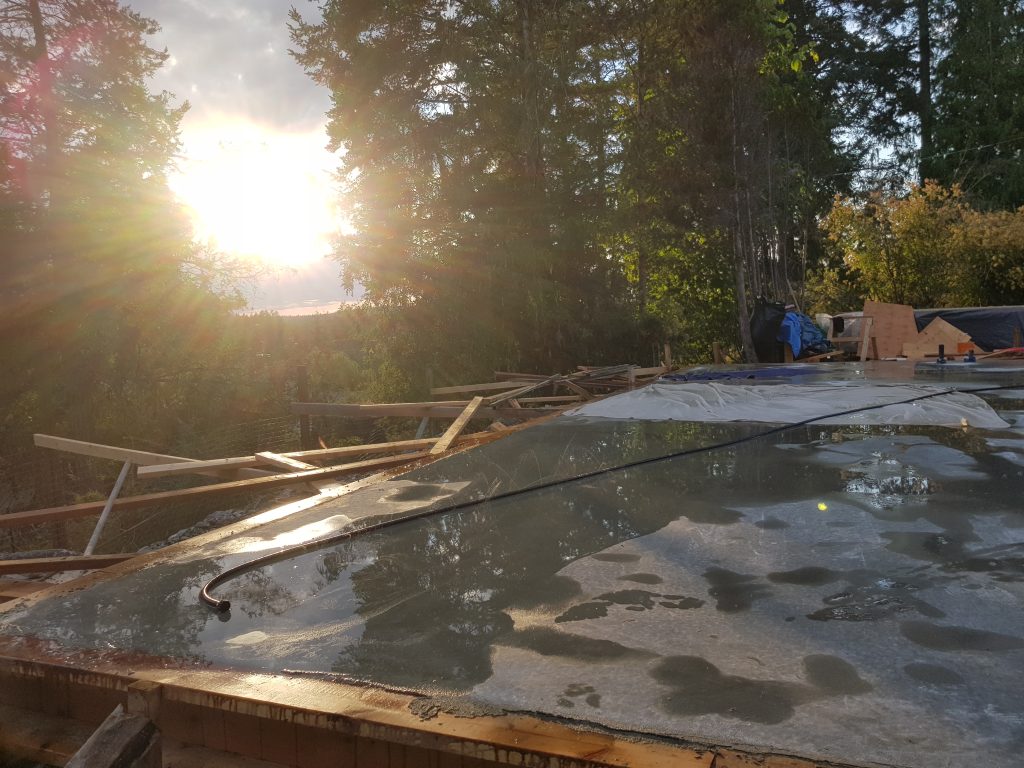
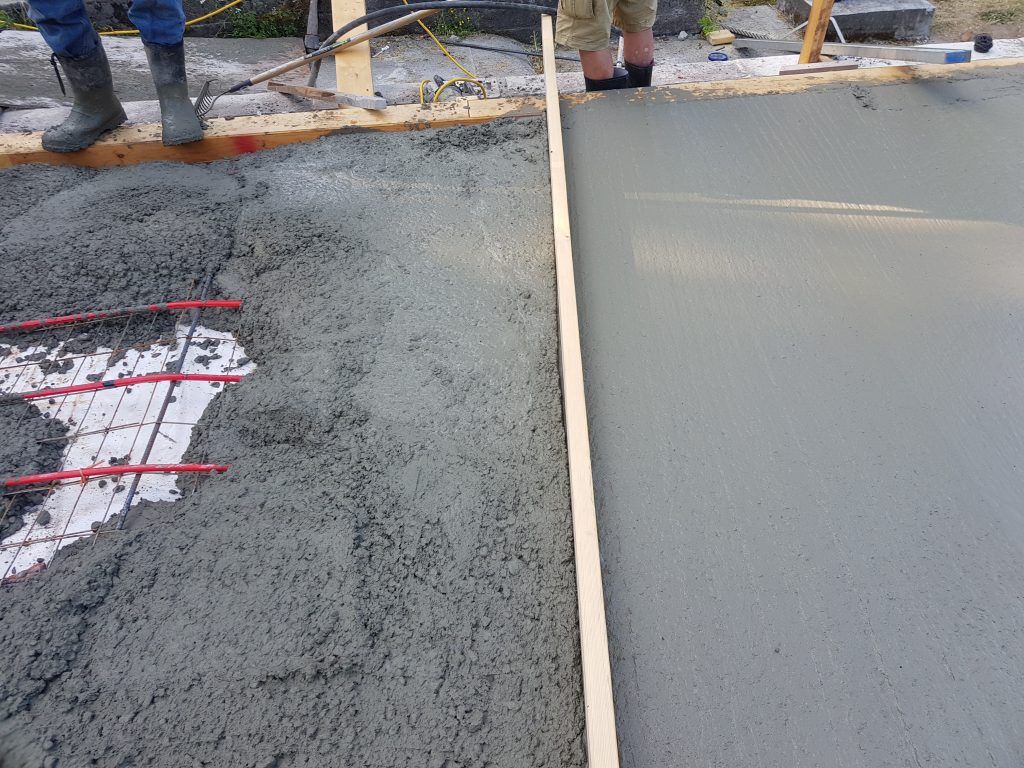
We made friends with a tree faller serendipitously at Thanksgiving dinner soon after gaining possession, who felled six trees for soon after that. The property was so overgrown and covered in debris and branches that it took weeks of clearing just to be able to see the ground. It took the better part of a year to move the 21’ logs off the land to a mill and get them back as lumber. During that time, I built a shop and an office for Lucia. In the end we were grateful for the delayed timeline, as the house design changed so many times that I was glad we had not laid a foundation for a house we no longer wanted. It had also given us time to save back up some funds to invest into the house. It took a year and a half but finally we poured the foundation this past summer and by fall I put the underlay on the roof, just in time for the rainy season.


Now with the house framed and winter setting in, I have begun sorting through the hundreds of gigabytes of time-lapse I have been taking of the build. I’m using it to organize my articles and will also be releasing time-lapse of the construction process. I did my best to capture a decent amount of footage of every aspect of the construction so far.


I had originally conceived of writing a simple how-to on elements of the construction process as I encountered them in the build. However, every time I started I felt the need to go back to the beginning and explain how we got here. In the two years since we settled on the property and with all the wonderful people we have met, I began to think about the alternative paths people are carving out for themselves in rural communities. These alternative paths broke my many preconceptions of rural living and so-called “blue collar” work. They challenged my conceptions of what building wealth means, the tradeoffs between making money and taking time, and the value of being a generalist.
If you have read this far, I really appreciate your time. If you’re interested in following my journey and seeing what Building by Nature becomes, I invite you to subscribe and share the blog with friends and foe, alike.
Thanks for reading,
George Franklin
Show your support by sharing this post 🙂
- Documenting, step-by-step, the process of designing and building our house
- Personal growth and self mastery through hands-on work
- Building a lifestyle instead of buying one
- Being an autodidact and learning in the age of the internet